Which 3D printed artificial quartz designs are worth considering for modern interiors? For homeowners, designers, distributors, and stone importers, five styles stand out as strong options for different design preferences: Taj Mahal, Calacatta Viola, Patagonia, Travertine, and Amazon Green. Each offers a distinct color palette and visual character, making it easier to match a quartz surface with a specific interior concept.
At MRD Stone, 3D printed artificial quartz combines the visual appeal of natural stone patterns with the consistency of engineered quartz. Whether you are sourcing quartz slabs for kitchen countertops, statement islands, bathroom vanities, or commercial interiors, the right design should balance appearance, application requirements, and supply consistency.
This guide explains how these five designs differ, which interiors they suit, and what buyers should check before placing a bulk order.
3D printed artificial quartz is an engineered quartz surface that uses printed patterns to create detailed stone-inspired visuals. Depending on the design, the pattern can reproduce the flowing veins, layered colors, and contrasting mineral-like details associated with natural marble or quartzite.
For buyers, one important advantage is design consistency. Natural stone slabs can vary considerably from one piece to another, while a controlled manufacturing process can help maintain a more consistent visual appearance across a production run. This can be particularly useful for multi-unit residential developments, hotel interiors, and large kitchen projects that require several matching slabs.
MRD Stone offers 3D printed quartz designs, including the SM809 Taj Mahal engineered quartz slab, which features a warm beige base and subtle vein lines. Buyers should still confirm the actual slab appearance, finish, thickness, and technical specifications before making a final selection.
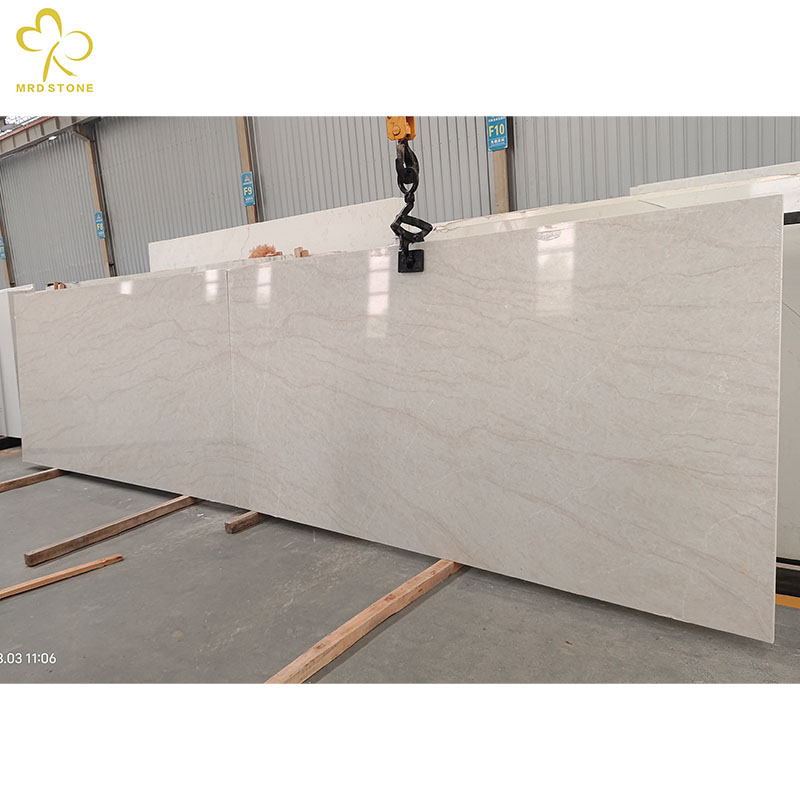
Taj Mahal is a suitable choice for projects that need a light, warm, and understated stone appearance. Its beige background and delicate veining work well in interiors where the countertop should complement the cabinetry and furniture rather than dominate the entire space.
For kitchen countertops, Taj Mahal quartz pairs naturally with cream cabinets, light oak, walnut, brushed brass hardware, and warm neutral wall finishes. It can also be considered for bathroom vanities, kitchen islands, and reception counters where a refined appearance is preferred.
One reason buyers consider Taj Mahal-style engineered quartz is its versatility. The pattern can create visual interest without the dramatic contrast of heavily veined surfaces. For projects involving multiple kitchens or repeated interior layouts, a consistent printed pattern can also simplify material coordination.
MRD Stone's SM809 Taj Mahal product page lists standard slab sizes of 3200 × 1600 mm, 3000 × 1400 mm, and 3500 × 2000 mm, with thickness options of 18 mm, 20 mm, and 30 mm. Buyers should confirm current availability and the specifications applicable to their order.
Calacatta Viola is a strong option for interiors that need a more expressive focal point. Its signature design direction is associated with a light background and prominent purple, burgundy, or wine-colored veining. The exact color balance and vein pattern depend on the individual product design.
Unlike a subtle beige surface, Calacatta Viola can become a central visual feature in a kitchen island, bathroom vanity, bar counter, or boutique hospitality interior. It works particularly well when surrounding materials are relatively restrained, allowing the veining to remain the main design element.
For designers and stone distributors, the key is to evaluate the pattern at full slab scale. A small sample may not show how the veins travel across the entire surface or how the pattern will look around a sink cutout, waterfall edge, or backsplash joint.
When sourcing Calacatta Viola 3D printed artificial quartz, ask the supplier for current slab photographs, available sizes, finish options, and confirmation of whether the same design can be maintained across the required quantity. This helps reduce the risk of selecting a pattern that looks different from the finished installation.
Patagonia is a good choice for projects that need a more dramatic and varied stone appearance. The design can feature a gray or neutral ground, broad white and cream areas, dark veins, and warm mineral-like accents. This combination creates more movement than a simple, uniform countertop pattern.
For a kitchen island, Patagonia-style quartz can serve as the main visual feature against plain cabinetry. It is also worth considering for statement bathroom vanities, reception desks, feature walls, and hospitality interiors where a distinctive stone pattern is part of the overall design concept.
MRD Stone's SM503 Patagonia artificial quartz stone slab uses a cool gray background with white and cream areas, charcoal veining, and warm gold accents. The product page identifies it as 3D printing quartz and lists multiple standard slab sizes and thickness options.

For larger projects, buyers should review the full slab rather than relying on a cropped product image. Pattern scale, vein direction, slab layout, and the placement of visible joints can all affect the final result. It is also worth confirming how the pattern will look across adjacent slabs before approving a large order.
Travertine-look quartz suits interiors that favor earthy colors, soft linear movement, and a relaxed natural aesthetic. Typical design characteristics include cream, sand, beige, and light taupe tones with subtle horizontal or layered markings.
Compared with a bold Calacatta Viola or dramatic Patagonia pattern, a Travertine-inspired surface usually creates a quieter visual effect. It can work well with minimalist cabinetry, natural wood, textured wall finishes, warm lighting, and neutral furniture.
For commercial interiors, this design direction can be useful for hotel reception areas, apartment kitchens, vanity counters, and other spaces that need a coordinated natural-material appearance. The overall result depends on the exact pattern, surface finish, lighting, and surrounding materials.
When comparing Travertine-look quartz with natural travertine, buyers should remember that the two are different materials. Engineered quartz is manufactured using a quartz-based composite, while natural travertine is a type of limestone. Their composition, maintenance needs, fabrication requirements, and performance characteristics should not be treated as interchangeable.
Before selecting a Travertine-style quartz slab, request close-up photographs and full-slab images. Confirm whether the pattern is predominantly linear or cloud-like, how much variation appears across the slab, and whether the selected finish supports the intended design.
Amazon Green is worth considering for projects that use color as part of the interior design. Green stone-inspired surfaces can range from deep forest tones to lighter green backgrounds with contrasting veins, depending on the specific design.
In kitchens, green quartz can create a distinctive island or countertop when paired with warm wood, off-white cabinetry, dark hardware, or metallic accents. In hospitality and retail settings, it can also help establish a recognizable visual identity without requiring every surface to use a bold pattern.
Because green designs can vary significantly in shade and veining, buyers should confirm the exact color of the available slab. Screen images may look different under daylight, showroom lighting, and warm indoor lighting. A physical sample or current production photograph is especially useful when color matching is important.
For distributors and project buyers, it is also sensible to confirm production availability, minimum order quantity, repeat-order consistency, and packaging arrangements before committing to a project schedule.
The best design depends on the role the surface needs to play in the room. The following comparison can help buyers narrow their choices before reviewing individual slabs and technical specifications.
| Design | Typical visual character | Suitable design direction |
|---|---|---|
| Taj Mahal | Warm beige tones and subtle veining | Timeless kitchens, warm neutrals, understated luxury |
| Calacatta Viola | Light background with bold purple or burgundy veins | Statement islands, artistic interiors, feature counters |
| Patagonia | Contrasting patches, dark veins, and varied accents | Feature surfaces, dramatic islands, hospitality projects |
| Travertine | Soft beige tones and layered linear movement | Minimalist interiors, natural textures, warm contemporary spaces |
| Amazon Green | Green tones with design-dependent veining | Color-led kitchens, boutique interiors, distinctive accents |
This comparison is a design guide rather than a ranking of sales performance. Actual color, pattern, availability, and technical properties should be verified against the specific product being quoted.
For importers, distributors, fabricators, and construction project buyers, choosing the pattern is only the first step. The following checks can help avoid specification gaps and material mismatches.
Quartz-based engineered surfaces should not automatically be assumed to be suitable for every environment. Confirm the manufacturer's guidance for heat exposure, outdoor use, installation, and maintenance. Follow the applicable fabrication safety requirements when cutting or processing engineered stone.
Buyers looking for additional options can explore MRD Stone's artificial quartz stone slab collection to compare available quartz designs and identify products for their projects.
For stone distributors, wholesalers, fabricators, and project contractors, a reliable supply arrangement involves more than finding an attractive slab. Product consistency, clear specifications, suitable packaging, and communication during order preparation are also important.
MRD Stone supplies engineered quartz products in different stone-inspired designs, including the SM809 Taj Mahal and SM503 Patagonia models. These products give buyers concrete options to evaluate when looking for warm neutral patterns or more dramatic, high-contrast surfaces.
When requesting a quotation, provide the preferred design, slab dimensions, thickness, finish, estimated quantity, destination, and intended application. If the project requires several matching slabs, explain the pattern and color consistency requirements in advance. This allows the supplier to assess the request more accurately.
Whether you are sourcing Taj Mahal 3D printed artificial quartz for residential kitchens or Patagonia-style engineered quartz for a commercial interior, reviewing the actual slab and confirming the product details are practical steps toward a better purchasing decision.
Which 3D printed artificial quartz designs should buyers consider?
Taj Mahal, Calacatta Viola, Patagonia, Travertine, and Amazon Green are five design options to consider. Taj Mahal suits warm neutral interiors, Calacatta Viola creates a bold focal point, Patagonia offers dramatic pattern variation, Travertine provides an earthy appearance, and Amazon Green introduces a distinctive color accent.
Is Taj Mahal 3D printed quartz suitable for kitchen countertops?
Yes, it can be considered for kitchen countertops and islands when the product specifications meet the project's requirements. MRD Stone's SM809 Taj Mahal design features a warm beige background and subtle veins. Buyers should confirm the available dimensions, thickness, finish, and care instructions before ordering.
What is the difference between Patagonia and Taj Mahal quartz?
Taj Mahal generally has a softer beige appearance with subtle veining, while Patagonia-style designs typically feature more contrasting areas, darker veins, and varied accents. The choice depends on whether the project needs a quiet neutral surface or a stronger visual statement.
Can 3D printed artificial quartz be used for large commercial projects?
It may be suitable for commercial applications such as reception counters, hospitality interiors, and multi-unit developments, provided the selected product meets the project's technical and regulatory requirements. Confirm slab availability, pattern consistency, fabrication requirements, and delivery arrangements before placing a bulk order.
What information should buyers provide when requesting a quartz slab quotation?
Provide the design name, slab size, thickness, surface finish, estimated quantity, destination, and intended application. For projects requiring multiple slabs, also specify color-matching expectations and whether sample approval is needed before production.

XIAMEN MRD STONE CO., LTD