Choosing the right 3D printed artificial quartz slab involves more than selecting an attractive color. For modern kitchens, luxury homes, hotels, and commercial interiors, buyers need to consider pattern consistency, slab dimensions, surface finish, fabrication requirements, and the overall design of the space.
The best 3D printed artificial quartz slab is one that matches the project's visual requirements, fits the intended application, and meets the buyer's technical and supply requirements. Taj Mahal is a strong option for warm, understated interiors, while Patagonia suits statement surfaces with dramatic patterns. Other printed quartz designs, including black and white patterns, can create a more contemporary appearance.
MRD Stone supplies engineered quartz slabs in a range of stone-inspired designs. This guide explains how to evaluate 3D printed artificial quartz for kitchen countertops, islands, bathroom vanities, feature walls, and other luxury interior projects, whether you are a homeowner, interior designer, fabricator, distributor, or wholesale buyer.
3D printed artificial quartz is an engineered quartz surface designed with printed patterns that reproduce the visual character of natural stone. Depending on the design, the surface may feature flowing veins, layered colors, mineral-like details, or contrasting areas inspired by marble and quartzite.
Unlike natural stone, which develops its patterns through geological processes, engineered quartz is manufactured using quartz-based materials, resin, pigments, and other components. Printing technology allows manufacturers to create detailed decorative patterns with a controlled visual appearance.
For large interior projects, pattern control can be an important consideration. When the production process and specifications support consistent output, buyers can more easily coordinate the appearance of multiple slabs across a kitchen, hotel, apartment development, or commercial space. Actual variation should still be confirmed with the supplier before ordering.
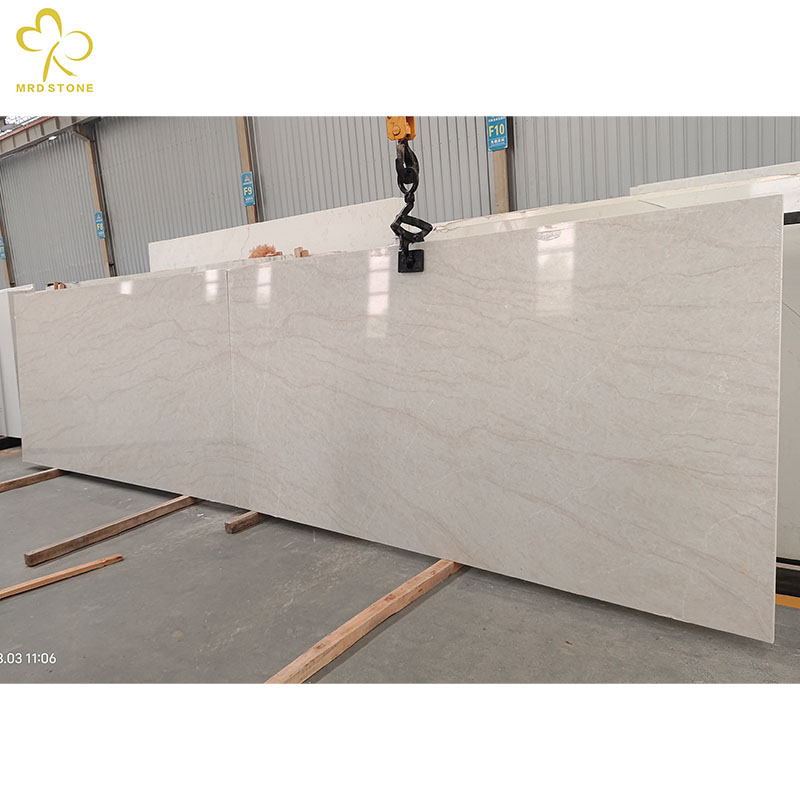
MRD Stone offers products such as its SM809 Taj Mahal 3D printing polished engineered quartz slab, which features a warm beige background and subtle vein lines. It is one example of how printed patterns can create a natural stone-inspired appearance for contemporary interiors.
Start by deciding what role the surface will play in the interior. Some projects need a quiet background that complements cabinetry and furniture. Others need a statement island or feature wall that becomes the focal point of the room.
For warm, natural interiors, beige and cream quartz designs can coordinate with oak cabinets, walnut furniture, and neutral wall finishes. For contemporary spaces, gray or black-and-white patterns can provide stronger contrast. More dramatic designs with contrasting veins and mineral-like patches can suit luxury kitchens, reception areas, and hospitality interiors.
When comparing products, evaluate the actual slab rather than relying only on a small sample or a cropped image. Pattern scale, vein direction, background color, and the distribution of contrasting details may look different when viewed across a full slab.
Buyers exploring different styles can browse MRD Stone's artificial quartz stone slab collection to compare available designs and identify products for their projects.
The most suitable design depends on the kitchen's color palette, layout, and intended visual effect. A countertop should work with the surrounding materials rather than being selected in isolation.
Taj Mahal quartz is a practical option for kitchens with warm neutral colors. Its beige background and subtle veining can complement white cabinets, natural wood, cream finishes, and brushed metal hardware. It works well when the goal is a coordinated appearance rather than a highly contrasting countertop.
Patagonia-style quartz offers a more dramatic look. Its design can combine gray, white, cream, dark veins, and warm accents. This makes it worth considering for statement islands, open-plan kitchens, and interiors where the countertop is intended to draw attention.
Black-and-white printed quartz can suit contemporary kitchens with minimalist cabinetry, dark hardware, or high-contrast finishes. The specific pattern determines whether the overall appearance feels understated or dramatic.
MRD Stone's SM503 Patagonia artificial quartz slab is designed to reproduce the visual character of natural Patagonia quartzite, with a cool gray ground, white and cream areas, charcoal veining, and warm gold accents.

For kitchen islands, the pattern should be evaluated across the entire visible surface. Large contrasting details can look different after cutting, particularly around sink openings, cooktop cutouts, seams, and waterfall edges. Discuss the layout with the fabricator before the slab is cut.
Two quartz slabs may look similar in photographs but differ in dimensions, thickness, finish, and manufacturing specifications. These details can affect material usage, fabrication planning, transportation, and installation.
Before requesting a quotation, confirm the following specifications with the supplier:
For reference, MRD Stone lists its SM503 Patagonia slab in standard sizes of 3200 × 1600 mm, 3000 × 1400 mm, and 3500 × 2000 mm, with thickness options of 18 mm, 20 mm, and 30 mm. Custom sizes may be available depending on the order and product requirements. Confirm current specifications directly before placing an order.
Matching the slab dimensions to the project layout early can help reduce unnecessary offcuts and make it easier to plan the number of slabs required.
Pattern consistency becomes especially important when a project requires several slabs with a coordinated appearance. A single residential vanity may need only a limited quantity, while a hotel, apartment development, or commercial fit-out may require multiple slabs across several rooms.
With natural stone, color and veining can vary from slab to slab. Printed engineered quartz can offer greater control over the intended decorative pattern, depending on the manufacturing process and product specification. However, buyers should not assume that every slab will be identical without confirming the supplier's production controls and acceptance criteria.
Before approving a large order, consider these practical steps:
These checks are particularly useful for projects where countertops, reception desks, vanity tops, and feature surfaces need to follow a coordinated design scheme.
Yes. Depending on the product's specifications and the intended installation conditions, engineered quartz slabs may be considered for several interior applications beyond kitchen worktops.
Kitchen islands and countertops: Printed quartz can provide a consistent design across preparation areas, islands, and breakfast bars. Confirm heat exposure guidance and use suitable protection for hot cookware.
Bathroom vanity tops: Light or softly veined designs can complement mirrors, cabinetry, and wall finishes. Confirm the product's care instructions and suitability for the intended wet-area application.
Reception desks and hospitality interiors: Distinctive patterns can create a memorable visual feature in hotel lobbies, retail spaces, and commercial reception areas. Slab dimensions and layout planning are important for larger surfaces.
Backsplashes and feature walls: Using a coordinated slab pattern across a countertop and vertical surface can create a unified interior design. Confirm the weight, fixing method, fabrication requirements, and suitability of the selected product for vertical installation.
Tabletops and custom interior elements: Engineered quartz may also be used for selected furniture and decorative surfaces when the design and support structure are appropriate.
Not every engineered quartz product is suitable for every application. Confirm manufacturer guidance before using a resin-based quartz surface outdoors, near high heat, or in any installation that requires specific technical or regulatory performance.
For importers, wholesalers, fabricators, and project contractors, selecting a supplier is part of the material decision. A suitable supplier should be able to provide clear product specifications, explain available options, and communicate the requirements for production and delivery.
When evaluating a supplier such as MRD Stone, consider the following questions:
For example, MRD Stone's 3D printed artificial quartz black pattern slab is another option for buyers evaluating more contemporary, high-contrast designs. Comparing specific products rather than broad material names makes it easier to confirm whether a supplier's offering fits the project.
For bulk orders, provide the intended application, required slab dimensions, thickness, finish, estimated quantity, destination, and target delivery date. The more clearly these requirements are defined, the easier it is to obtain a useful quotation and avoid misunderstandings during order preparation.
The required slab quantity depends on the countertop dimensions, slab size, layout, cutouts, pattern direction, and fabrication allowance. Calculating only the total surface area can provide an initial estimate, but it does not guarantee the final number of slabs.
For a straightforward rectangular countertop, the approximate surface area can be calculated by multiplying the length by the width. Convert all measurements into the same unit before calculating.
For example, a countertop measuring 3.0 m long and 0.65 m deep has an approximate surface area of 1.95 square meters. This is only the installed surface area. The actual material requirement may be higher because of cutting waste, seams, backsplash pieces, vein direction, and other layout constraints.
For an island or a project using multiple slabs, prepare a cutting plan with the fabricator before ordering. Confirm the dimensions of each piece and whether the pattern needs to follow a particular direction. For large projects, it is also sensible to agree on the quantity of spare material required for future repairs or replacement.
A clear quotation request helps the supplier identify the right product and confirm whether the specifications can be met. Before contacting MRD Stone, prepare the following information:
If the project involves custom countertops, vanity tops, or other cut-to-size elements, include drawings where available. This helps clarify the dimensions, cutouts, edge profiles, and material requirements before production begins.
MRD Stone's engineered quartz range provides options for buyers seeking stone-inspired patterns for modern kitchens and luxury interiors. By comparing the actual product specifications, reviewing slab images, and defining the project requirements early, buyers can make a more informed decision about the right surface for their application.
What is 3D printed artificial quartz?
3D printed artificial quartz is an engineered quartz surface that uses printed decorative patterns to reproduce the appearance of natural stone. Its suitability depends on the specific product composition, technical specifications, and intended application.
How do I choose 3D printed quartz slabs for a modern kitchen?
Start with the cabinet color, kitchen layout, and desired visual effect. Beige and softly veined patterns suit warm, understated interiors, while contrasting or dramatic designs can make an island or countertop a focal point. Confirm slab dimensions, finish, and technical specifications before ordering.
Are 3D printed quartz patterns consistent across multiple slabs?
Printed engineered quartz can offer controlled decorative patterns, but the degree of consistency depends on the product and manufacturing process. Ask the supplier to confirm expected variation and provide current full-slab photographs or a reference sample before approving a large order.
What slab dimensions and thickness should I choose?
The appropriate dimensions and thickness depend on the countertop layout, fabrication plan, support structure, and project specifications. MRD Stone lists SM503 Patagonia in several standard slab sizes and thicknesses, including 18 mm, 20 mm, and 30 mm. Confirm the available options for the exact product you intend to order.
Can 3D printed artificial quartz be used for luxury hotel and commercial projects?
It can be considered for suitable interior applications such as reception counters, vanity tops, countertops, and feature surfaces, provided the selected product meets the project's technical and regulatory requirements. Buyers should verify the quantity, dimensions, finish, installation requirements, and delivery schedule.
What should I include in a quartz slab quotation request?
Include the preferred design, slab dimensions, thickness, finish, estimated quantity, destination, application, and target delivery date. For large projects, also provide drawings, pattern consistency requirements, and sample approval expectations.
Is engineered quartz suitable for outdoor kitchens?
Not every engineered quartz product is suitable for outdoor use. Resin-based surfaces may be affected by prolonged UV exposure and temperature changes. Check the manufacturer's technical documentation and obtain confirmation that the specific product is suitable for the intended environment.

XIAMEN MRD STONE CO., LTD