Choosing the right quartz countertop is not just about color. The pattern needs to work with your cabinets, flooring, lighting, and overall kitchen layout. Taj Mahal, Calacatta Viola, and Patagonia are three distinctive stone-inspired designs, but each creates a different atmosphere.
For most kitchens with warm, neutral finishes, Taj Mahal is a versatile choice. Calacatta Viola suits homeowners who want bold, artistic veining, while Patagonia is ideal for a dramatic countertop or statement island with varied colors and strong visual movement. The best option depends on whether you want the countertop to blend into the room or become its main design feature.
MRD Stone offers engineered quartz slabs inspired by natural stone, including its SM809 Taj Mahal and SM503 Patagonia designs. This guide compares the three styles to help homeowners, interior designers, fabricators, and stone distributors make a more informed selection.
The main difference is the visual character of each design. Taj Mahal typically creates a soft, warm, and understated look. Calacatta Viola brings stronger contrast through its distinctive purple or burgundy-style veining. Patagonia offers a more varied composition, combining contrasting areas and mineral-like patterns for a dramatic natural stone effect.
These names describe design styles rather than three identical material types. When comparing products, check whether the slab is natural stone or engineered quartz. The two can look similar but differ in composition, fabrication requirements, maintenance, and performance.
| Comparison | Taj Mahal | Calacatta Viola | Patagonia |
|---|---|---|---|
| Typical colors | Beige, cream, warm white | White or cream with purple and burgundy-style veins | Gray, white, cream, dark veins, warm accents |
| Visual effect | Soft and understated | Bold and artistic | Dramatic and multidimensional |
| Cabinet pairing | Cream, oak, walnut, beige | White, deep wood, muted neutrals | Plain white, gray, black, warm wood |
| Best design role | A versatile countertop across the kitchen | A distinctive focal point | A statement island or feature surface |
This comparison describes common design characteristics, not a guaranteed specification for every slab. The exact appearance depends on the product model and pattern. Buyers should review actual product photographs and samples before making a final decision.
Taj Mahal quartz is a strong option for kitchens that need warmth without an overly busy pattern. Its beige background and subtle veining can complement both contemporary and traditional interiors, especially when the design includes natural wood, cream cabinetry, warm metal finishes, or neutral flooring.
For a smaller kitchen, a relatively soft pattern can help the countertop feel integrated with the surrounding cabinetry. In a larger kitchen, the same design can create a calm foundation for a spacious island without competing with decorative lighting or statement furniture.
MRD Stone's SM809 Taj Mahal 3D printed engineered quartz slab is described as having a warm beige base and subtle vein lines. It is a relevant option for buyers seeking a natural stone-inspired look in an engineered quartz product.
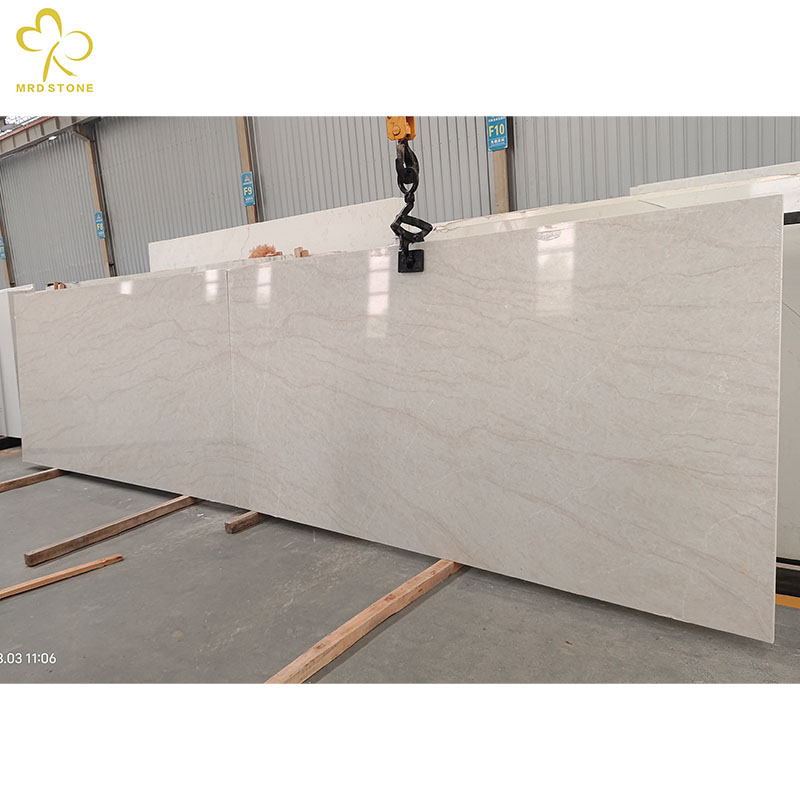
Choose Taj Mahal if: you prefer warm neutral colors, want a countertop that coordinates with different cabinet styles, or need a relatively understated pattern for a complete kitchen installation.
Before ordering, confirm the available thickness, finish, slab dimensions, and pattern consistency. If several slabs will be installed side by side, reviewing the full slab is especially important.
Calacatta Viola is better suited to kitchens where the countertop is intended to attract attention. Its characteristic design combines a light background with bold purple, burgundy, or wine-colored veining, creating a more expressive look than a subtle beige surface.
A kitchen island is one of the most effective places to use this pattern. Against plain white cabinets or dark wood, the contrasting veins can become a visual centerpiece. The same design direction can work for a breakfast bar, backsplash, or coordinated vanity surface.
However, bold veining needs careful planning. If the cabinets, flooring, backsplash, and countertop all have strong patterns, the overall space may feel visually crowded. A simpler surrounding palette usually gives Calacatta Viola more room to stand out.
For fabricators and project buyers, pattern placement is another consideration. Ask for full-slab images rather than relying only on small samples. Vein direction and the position of contrasting colors can affect how the finished countertop looks around sink cutouts, corners, and waterfall edges.
When sourcing this style, verify that the selected product is specifically a Calacatta Viola design rather than a different Calacatta pattern. Similar product names do not guarantee the same color composition or veining.
Choose Calacatta Viola if: your project calls for a distinctive focal point, artistic veining, and a more expressive alternative to traditional beige or white countertops.
Patagonia is a suitable choice for kitchens that benefit from contrasting colors and a more complex stone-inspired pattern. Depending on the specific design, the surface can combine a gray background, white and cream areas, charcoal veins, and warm gold accents.
Compared with Taj Mahal, Patagonia generally creates more visual movement. Compared with Calacatta Viola, its appeal comes from the combination of contrasting areas and varied mineral-like details rather than purple or burgundy-style veining.
MRD Stone's SM503 Patagonia artificial quartz slab is presented as an engineered quartz surface inspired by natural Patagonia quartzite. Its product description highlights a cool gray ground, drifting white and cream areas, dark charcoal veins, and warm gold flecks.

Patagonia-style quartz can work especially well on a large island with plain cabinetry. The island provides enough surface area for the pattern to be visible, while simpler surrounding materials help keep the overall design balanced.
For larger kitchens, commercial interiors, and multi-unit projects, check the pattern across adjacent slabs before approving the layout. A dramatic pattern may look very different when cut into separate countertop sections, particularly when the installation includes seams or waterfall edges.
Choose Patagonia if: you want a statement island, prefer varied natural stone-inspired details, or need a countertop that becomes a defining feature of the kitchen.
The cabinet color is one of the easiest ways to narrow down your choice. A countertop should complement the dominant colors in the kitchen rather than be selected in isolation.
It is also important to consider lighting. A beige slab may look warmer under warm indoor lighting, while a high-contrast pattern may appear more pronounced under strong directional light. Compare samples with your actual cabinet and flooring materials whenever possible.
Appearance is only one part of the decision. For homeowners, fabricators, importers, and stone distributors, the selected product must also meet the project's technical and fabrication requirements.
When comparing products from MRD Stone or other suppliers, consider the following points before placing an order:
Engineered quartz should not automatically be assumed suitable for outdoor applications or direct contact with hot cookware. Resin-based products can have limitations involving UV exposure and heat. Follow the selected product's technical documentation and installation instructions.
Buyers comparing additional designs can explore MRD Stone's artificial quartz stone slab collection to review other colors and patterns for kitchen countertops and related interior applications.
If you are still deciding between Taj Mahal, Calacatta Viola, and Patagonia, start by defining the visual role of the countertop.
Choose Taj Mahal for warmth and versatility. It is a practical starting point when you want a neutral kitchen that can work with wood, cream, and other warm finishes.
Choose Calacatta Viola for a bold design statement. Its distinctive veining is better suited to projects where the countertop should be one of the first things people notice.
Choose Patagonia for contrast and visual complexity. It is worth considering when the island or countertop needs a dramatic, natural stone-inspired appearance.
For buyers sourcing engineered quartz slabs from MRD Stone, the next step is to review the specific product, confirm its specifications, and compare full-slab images with the intended kitchen layout. A well-matched pattern can improve the overall design, while checking material details and installation requirements helps prevent avoidable problems later.
Which is better for kitchen countertops: Taj Mahal, Calacatta Viola, or Patagonia?
None is universally better. Taj Mahal suits warm, understated kitchens, Calacatta Viola is ideal for bold veining and statement surfaces, and Patagonia works well for dramatic patterns with contrasting colors. The best choice depends on the cabinet palette, kitchen layout, and desired visual effect.
Is Taj Mahal quartz a good choice for white kitchen cabinets?
Yes. Taj Mahal-style engineered quartz can complement white cabinets by introducing warm beige tones and subtle veining. It is particularly suitable when the design also includes natural wood, warm metal finishes, or neutral flooring.
Is Calacatta Viola too bold for a small kitchen?
Not necessarily. Calacatta Viola can work in a small kitchen when the surrounding cabinets, walls, and flooring are relatively simple. Using it on one main countertop or island can create a focal point without making every surface visually busy.
Is Patagonia quartz suitable for a kitchen island?
Yes, Patagonia-style engineered quartz can be a good option for a statement island because its contrasting colors and varied patterns can be displayed across a larger surface. Review the full slab and plan seams and cutouts before fabrication.
What is the difference between natural Patagonia quartzite and Patagonia engineered quartz?
Natural Patagonia quartzite is quarried stone, while Patagonia engineered quartz is manufactured using quartz-based materials and resin, with a pattern designed to reproduce a similar visual effect. Their composition, fabrication requirements, and maintenance instructions differ, so buyers should confirm the material type of the product being purchased.
What should I check before buying engineered quartz for a kitchen countertop?
Confirm the material type, slab dimensions, thickness, surface finish, technical specifications, pattern consistency, fabrication requirements, and delivery arrangements. For larger projects, request full-slab images or samples before approving the order.

XIAMEN MRD STONE CO., LTD