Choosing the right surface material is an important decision for residential interiors, commercial buildings, hospitality projects, and architectural applications. Natural stone and sintered stone are two popular options, but they offer different advantages in appearance, composition, maintenance, and practical performance. Understanding these differences helps architects, contractors, wholesalers, and property developers select a material that matches their project requirements.
So, which is better: natural stone or sintered stone? The answer depends on where the material will be installed, the desired design, expected maintenance, and the project's budget. Natural stone is valued for its authentic geological patterns and individual character, while sintered stone offers controlled designs, large-format options, and strong resistance to many everyday environmental conditions.
As a professional stone processing and export company, MRD Stone supplies different surface materials for construction and interior decoration projects. Its product range includes natural marble, granite, and sintered stone slabs, giving buyers more options when comparing materials for different applications.
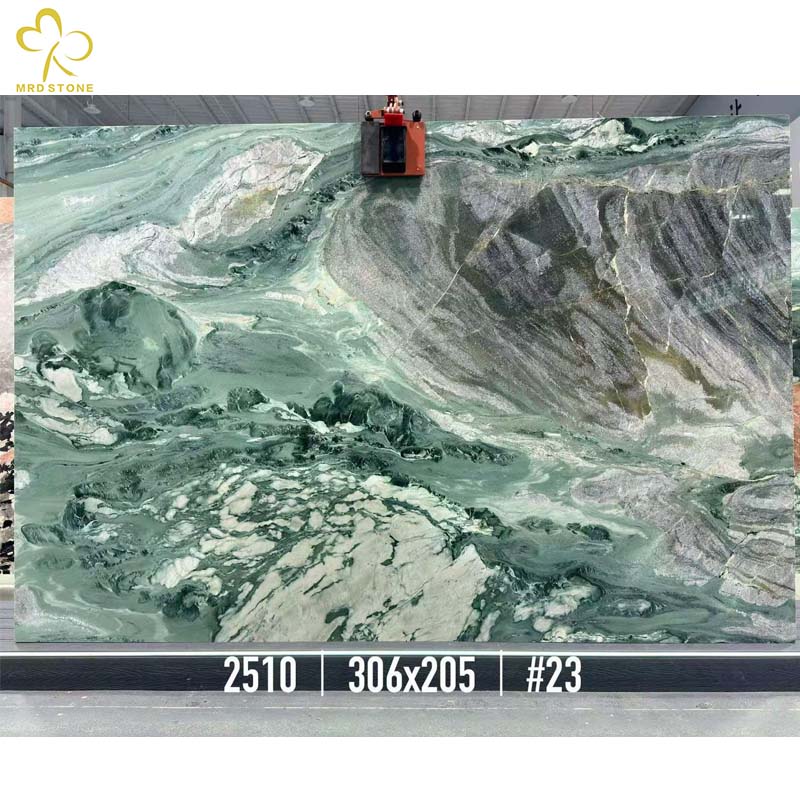
Natural stone slab with distinctive mineral patterns and color variations.
The main difference between natural stone and sintered stone is how they are formed. Natural stone is quarried from the earth and processed into slabs, tiles, or custom-cut pieces. Its colors, veins, mineral composition, and surface patterns develop through natural geological processes over long periods.
Sintered stone is a manufactured surface material made by combining selected mineral raw materials and processing them under high pressure and high temperatures. This production method creates a dense material with controlled thickness, surface appearance, and decorative patterns.
For buyers, this distinction affects more than appearance. Natural stone offers individual variations from slab to slab, while sintered stone is generally more suitable when a project requires a more consistent decorative effect across multiple surfaces.
MRD Stone provides both material categories, allowing customers to compare natural stone slabs and manufactured surface options according to their project specifications.
Natural stone remains a preferred material for projects that value authentic textures, natural colors, and distinctive architectural details. Since each block develops under different geological conditions, natural stone slabs can feature unique veins, grains, mineral patterns, and color variations.
Common natural stone options include marble, granite, slate, and quartzite. Each material has different physical properties and is suited to different applications.
Natural marble is widely selected for luxury interiors, hotel lobbies, bathroom walls, flooring, fireplace surrounds, and decorative countertops. Its flowing veins and elegant appearance make it particularly attractive for projects where visual impact is important. However, marble is generally more sensitive to acidic substances and may require sealing and careful maintenance depending on its variety and finish.
Granite is commonly used for kitchen countertops, stairs, exterior paving, wall cladding, and other areas that require a hard-wearing natural surface. Its mineral composition and physical performance vary by stone type, but many granite varieties offer good resistance to everyday wear.
For projects requiring natural marble slabs, buyers can explore MRD Stone's natural marble collection, which includes different colors and decorative styles for architectural and interior applications.
Natural stone is particularly suitable when a designer wants each slab to contribute its own visual character. Book-matched marble walls, natural stone feature panels, and granite exterior surfaces are examples of applications where the original appearance of the material is an important part of the design.
Sintered stone is developed to provide a manufactured surface with controlled decorative patterns and consistent material specifications. During production, mineral raw materials are compacted under high pressure and exposed to high temperatures to form a dense slab.
One of its main advantages is design flexibility. Manufacturers can create marble-look, concrete-look, and natural stone-inspired surfaces without depending on the natural variations found in quarry materials.
Sintered stone is also known for several practical characteristics:
These properties make sintered stone a practical option for kitchen countertops, bathroom walls, furniture surfaces, cabinet facades, wall cladding, and selected outdoor applications. However, edge impact, slab thickness, installation methods, and fabrication quality still need to be considered.

Marble-look sintered stone surface for modern kitchen and interior applications.
MRD Stone offers sintered stone slabs in different decorative styles, including marble-inspired and contemporary surface designs. Buyers can compare available finishes and slab formats when planning residential or commercial projects.
When comparing these materials, it is useful to look beyond appearance. The following table summarizes their general characteristics. Actual performance depends on the specific stone variety, sintered stone formulation, finish, thickness, and installation conditions.
| Comparison Factor | Natural Stone | Sintered Stone |
|---|---|---|
| Composition | Naturally formed rock | Processed mineral materials |
| Appearance | Unique natural patterns | Controlled decorative designs |
| Color Consistency | Natural variation between slabs | Generally more consistent |
| Heat Resistance | Depends on stone type | Generally high |
| Scratch Resistance | Depends on mineral composition | Generally high |
| Water Absorption | Varies by stone and treatment | Generally very low |
| Maintenance | May require sealing and specific care | Usually easy to clean |
| Typical Applications | Floors, walls, countertops, stairs | Countertops, facades, walls, furniture |
There is no universal winner in this comparison. Natural stone is often the better choice for projects where authentic geological patterns and natural material character are priorities. Sintered stone is often more suitable when buyers need consistent designs, low water absorption, and a surface that can handle demanding everyday conditions.
Kitchen countertops need to handle food preparation, water, cleaning products, temperature changes, and daily contact with cookware. Both natural stone and sintered stone can be suitable, but their performance should be evaluated carefully.
Granite is a popular natural stone countertop option because many granite varieties offer good hardness and durability. However, buyers should check the specific stone's porosity, finish, and sealing requirements before purchasing.
Sintered stone is another strong option for kitchen surfaces. Its low water absorption and heat resistance make it suitable for many modern kitchen designs. Nevertheless, the edges and corners can be vulnerable to impact if the slab is improperly fabricated or installed.
For a kitchen project, consider the following questions:
Buyers who prefer natural materials can also compare MRD Stone's natural stone products for different countertop and interior applications.
Outdoor applications require additional attention because surfaces are exposed to sunlight, rain, temperature fluctuations, moisture, and sometimes freezing conditions.
Certain granite and other natural stone varieties are suitable for outdoor paving, stairs, exterior walls, and landscaping. However, not all natural stones perform equally well outdoors. Water absorption, freeze-thaw resistance, surface finish, and slip resistance should be checked before specification.
Sintered stone can also be used in selected outdoor applications because many products have good UV stability, low water absorption, and resistance to environmental exposure. Buyers should confirm that the selected product is specifically rated for exterior use and suitable for the local climate.
For outdoor projects, the right material should be selected based on verified technical data rather than appearance alone. Installation details, drainage, substrate preparation, and surface texture are equally important to long-term performance.
For wholesalers, contractors, importers, and project procurement teams, material selection is only one part of the purchasing process. Consistent quality, processing accuracy, packaging, and delivery arrangements also influence the success of a stone project.
Before placing an order, buyers should confirm several important details:
A reliable stone supplier should be able to provide clear product information and communicate about material selection, processing, and export requirements. MRD Stone is a manufacturer and trading company based in Xiamen, China, with stone processing and export experience. Its product range covers both natural and manufactured stone materials for different customer requirements.
For projects that emphasize natural beauty, unique veins, and the character of genuine geological materials, natural marble and granite are worth considering. They are particularly suitable for luxury interiors, feature walls, natural stone flooring, and architectural details.
For projects that prioritize consistent patterns, low water absorption, large-format surfaces, and practical maintenance, sintered stone may be the more suitable choice. It is frequently considered for modern kitchens, bathroom surfaces, wall panels, and selected exterior applications.
The best approach is to compare actual samples, technical specifications, and fabrication requirements before making a final decision. Instead of selecting a material based only on price or appearance, match its characteristics to the environment where it will be installed.
MRD Stone offers natural stone and sintered stone options for residential, commercial, and architectural projects. Buyers can contact the company to discuss slab selections, sizes, finishes, and project-specific requirements.
Is natural stone better than sintered stone?
Neither material is universally better. Natural stone is preferred for authentic patterns and unique natural character, while sintered stone offers more consistent designs, low water absorption, and high resistance to many everyday conditions. The right option depends on the application and project requirements.
Is sintered stone real stone?
Sintered stone is a manufactured mineral-based surface material rather than a quarried natural stone. It is produced by processing selected mineral raw materials under high pressure and high temperatures.
Can sintered stone be used for kitchen countertops?
Yes. Sintered stone is widely considered for kitchen countertops because of its low water absorption, heat resistance, and scratch resistance. Proper fabrication, edge protection, and installation are still important.
Is natural marble suitable for kitchen countertops?
Natural marble can be used for kitchen countertops, but it is more sensitive to acidic substances such as lemon juice and vinegar. Buyers should consider sealing, regular maintenance, and the possibility of etching before choosing marble for a busy kitchen.
Which material requires less maintenance?
Sintered stone generally requires less routine maintenance because of its low water absorption. Natural stone maintenance varies by material. Some natural stones may need periodic sealing and cleaners suitable for their mineral composition.
Can natural stone and sintered stone be used in the same project?
Yes. Designers can combine natural marble or granite with sintered stone in different areas of a building. For example, natural marble may be used for feature walls while sintered stone is selected for kitchen countertops or cabinet surfaces.
What should importers check before ordering stone slabs?
Importers should confirm material specifications, dimensions, thickness, finish, color consistency, quality standards, packaging, loading arrangements, and delivery schedules. Actual slab photos and samples can also help reduce purchasing uncertainty.
Where can buyers source natural stone and sintered stone slabs?
MRD Stone, based in Xiamen, China, supplies natural marble, granite, and sintered stone products for residential and commercial projects. Buyers can contact the company to discuss available designs, specifications, and export orders.

XIAMEN MRD STONE CO., LTD